

Imagine stepping into the shower only to be met with a weak, dribbling stream of water. Or trying to water your garden with a hose that barely reaches. Low water pressure is a frustrating reality for many homeowners, especially those in multi-story homes or relying on well water. Finding the right water booster pump for your house can transform your daily water experience, ensuring consistent pressure at every tap, showerhead, and appliance.
In this review, we focus on two leading constant-pressure booster pumps: the Aquastrong Whole House Water Pressure Booster Pump and the Whole House Water Pressure Booster Pump for Home by FCNP. Both units are designed to deliver steady, adjustable pressure across multiple fixtures, making them ideal for residential and light commercial use. We have evaluated their performance, build quality, noise levels, and smart features to help you decide. For background on maintaining optimal pressure, see our guide on how a well pressure tank works.

Pros
- Significantly boosts water pressure from weak levels (e.g., 35 PSI) to a consistent 50-80 PSI, as confirmed by user reviews.
- Extremely quiet operation for a whole house pump, often described as 'whisper quiet' by customers.
- Durable build with stainless steel impeller and aluminum housing, plus intelligent protection features that prevent damage.
- Energy efficient with substantial savings on electricity bills compared to standard pumps.
Cons
- May cause nuisance tripping on standard GFCI outlets; some users needed to install a specific Leviton GFCI outlet to resolve the issue.
- Maximum shallow well depth is limited to 26 ft, so not suitable for deep wells.
- Initial setup might require electrical work if GFCI compatibility is an issue, especially for those on 15A circuits.
The Aquastrong Smart 45 is a whole house water pressure booster pump designed to solve low water pressure problems in homes, apartments, and light commercial settings. It automatically adjusts its speed and pressure to maintain a constant flow, making it ideal for multi-story houses, properties with roof tanks, or shallow wells up to 26 feet deep. With a maximum pressure of 80 PSI and a flow rate of 1500 GPH, it can handle multiple outlets simultaneously without dropping pressure.
Standout features include its variable speed inverter technology, which not only ensures constant pressure but also reduces noise to just 55 dB(A) and cuts energy consumption by over 50% compared to traditional pumps. User reviews confirm dramatic improvements in water pressure, with many reporting jumps from 35-40 PSI to a steady 50-80 PSI. The pump is also praised for being remarkably quiet during operation, often going unnoticed even in quiet homes.
Build quality is robust, featuring a stainless steel impeller, maintenance-free pressure tank, and a rustproof aluminum motor housing. The pump includes a check valve and stainless steel connectors for leak prevention, and it can handle hot water up to 175°F. Intelligent protections like dry-running, overheating, and pump block safeguards ensure long-term reliability, and the control panel provides clear fault indicators.
On the downside, several users reported that the pump can trip standard GFCI outlets during start-up, requiring a specific GFCI outlet (Leviton GFTR2-W) or a non-GFCI circuit. This may add installation complexity or electrical work. Additionally, the shallow well capability is limited to 26 ft, so it won't work for deeper wells. The pump is also relatively heavy and large, so proper mounting is needed.
Overall, the Aquastrong Smart 45 is an excellent choice for homeowners needing a reliable, quiet, and energy-efficient water pressure booster. Its intelligent features and strong performance outweigh the minor GFCI compatibility issue, making it a top recommendation for city mains, roof tanks, and shallow well applications. With proper installation, it delivers exceptional value and long-lasting service.
Pros
- Smart constant pressure automatically adjusts to water demand for consistent flow
- Quiet operation ideal for indoor installation, especially in garages or basements
- Energy savings reduce annual operating costs significantly
- Stainless steel construction ensures durability and clean water
- Easy to install and configure with user-friendly control panel
Cons
- A few users report motor failure within two months, raising reliability concerns
- Advertised flow rate may not be achieved in real-world conditions (e.g., lift from 0 to 50 psi)
- Noise level, while low, is not completely silent; some users hear a click on startup
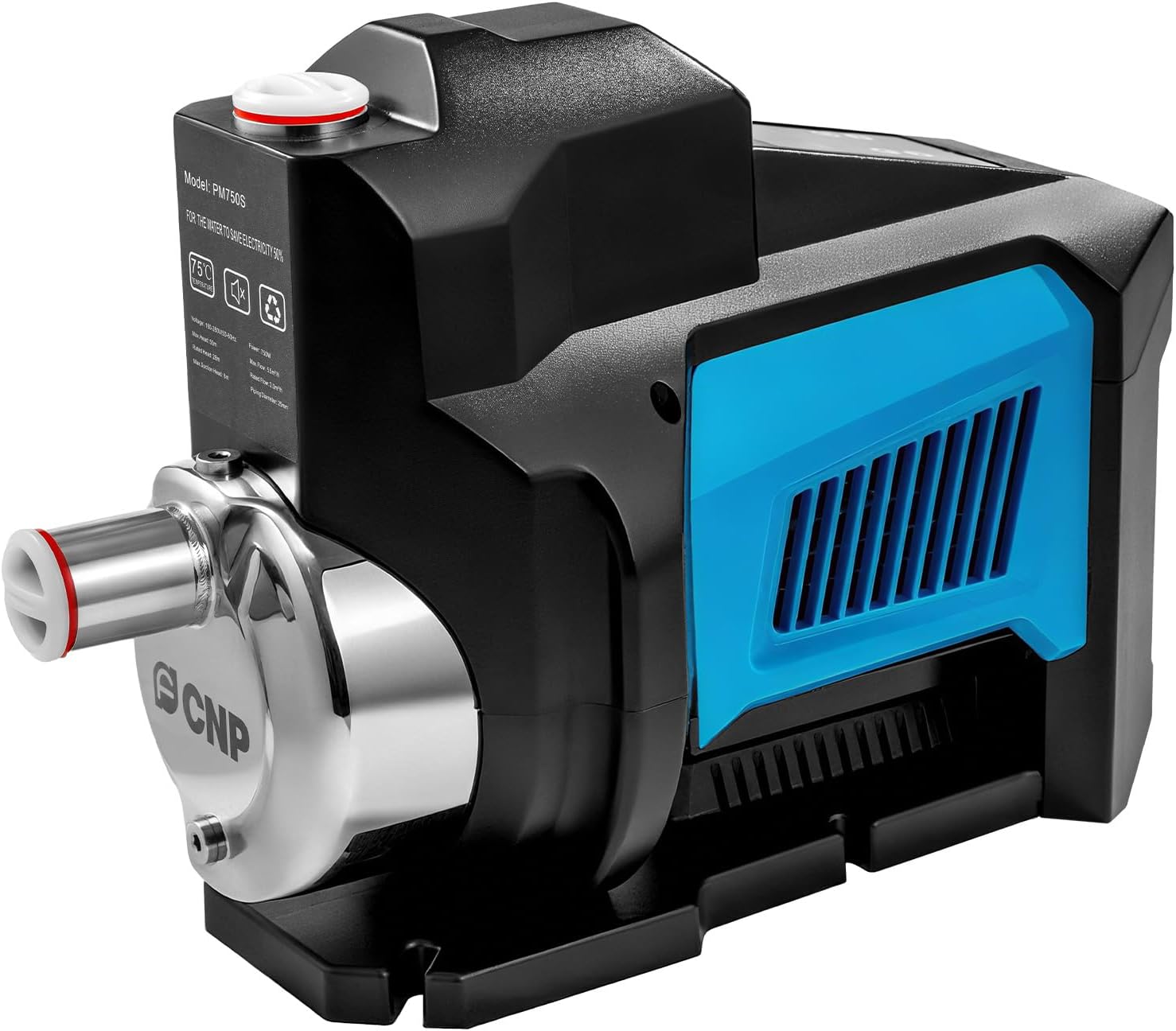
The FCNP PM750S is a whole house water pressure booster pump designed for homes with low water pressure. It is particularly suited for properties with multiple floors or high water demand, promising to supply up to 10 faucets simultaneously with a constant 80 PSI pressure. This pump is ideal for homeowners needing a reliable upgrade from city main lines, rooftop tanks, or shallow wells.
Standout features include its smart variable frequency drive that automatically adjusts pressure based on water usage. This ensures a steady flow even when multiple faucets are open. The permanent magnet motor is both energy-efficient and quiet, with noise levels between 25 and 40 dB. In practice, many users confirm the pump runs quietly, though a click on startup is noticeable. The energy savings of over 50% compared to traditional motors are a significant long-term benefit.
Build quality is robust with a thickened stainless steel pump head that resists corrosion and handles hot water up to 167°F. The integrated design includes multiple protections such as dry run and power failure safeguards. However, some users have reported motor failure within two months of installation, indicating potential quality control issues. The warranty experience has been criticized as poor, which is a drawback for long-term investment.
While the pump performs well in many scenarios, real-world flow rates may differ from advertised specs. One reviewer noted that when lifting from zero to 50 PSI, the actual flow was closer to 2 GPM rather than the expected 13 GPM, so realistic expectations are important. The pump is also heavy and should be installed in a location with adequate ventilation.
Overall, the FCNP PM750S offers strong pressure boosting and smart features at a competitive price point. It is a good choice for those who need constant pressure and quiet operation, but buyers should be aware of potential reliability issues and consider purchasing an extended warranty. With proper installation and care, it can be a valuable addition to a home water system.
Buying Guide: What to Look for in a Water Booster Pump for House
Before you choose a water booster pump for your house, it helps to understand the key factors that separate a good pump from a great one. The following criteria will guide you toward a model that matches your home’s demand and your comfort expectations.
Flow Rate and Pressure Range
The flow rate, measured in gallons per hour (GPH), determines how much water the pump can move at once. For a typical home with 3–4 bathrooms and a kitchen, a pump delivering 1500 GPH or more is sufficient. The pressure range should be adjustable, ideally from 22 to 80 PSI, so you can set the output to match your plumbing. Both the Aquastrong and FCNP models offer a maximum pressure of 80 PSI, but the FCNP model tops out at 1532 GPH, just slightly higher than the Aquastrong’s 1500 GPH.
Smart Constant-Pressure Technology
A true constant-pressure pump automatically adjusts its speed as water demand changes. This means when you turn on a second tap or flush a toilet, the pressure remains steady rather than spiking or dropping. Both pumps reviewed here use inverter-driven permanent magnet motors and onboard microcontrollers to monitor flow and maintain a consistent output. The Aquastrong model is preset at 44 PSI but can be adjusted from 22 to 80 PSI. The FCNP model offers the same range and also includes a deceleration and auto-shutdown when water flow ceases, improving energy efficiency.
Noise and Energy Efficiency
No one wants a loud pump clattering away in the basement. Look for models that operate at decibel levels of 55 dB or lower for comfortable use. The Aquastrong Smart 45 runs at about 55 dB(A), which is similar to a quiet conversation. The FCNP PM750S claims an even quieter 25–40 dB, making it one of the most silent options we have assessed. Both units use variable frequency drives and permanent magnet motors to cut energy consumption by more than 50% compared to standard pumps. For more on sizing your pressure system, read our article on well pressure tank sizing.
Build Quality and Protection Features
The pump should be built to handle hot water up to around 175°F and include protective features such as dry-run protection, overheating cutoff, and leak detection. Stainless steel impellers and connectors resist corrosion and extend life. Both pumps in this comparison have stainless steel pump heads and are designed for durability. The Aquastrong also offers a maintenance-free pressure tank and a check valve on the outlet. The FCNP includes a thickened stainless steel head that resists acid and alkali. Look for clear fault indicators on the control panel — both models provide comprehensive diagnostics.
Final Thoughts
Choosing the right water booster pump for your house comes down to your specific home size, noise tolerance, and budget. The Aquastrong Whole House Water Pressure Booster Pump delivers a robust, all-in-one design with proven reliability and a strong 4.3-star rating from hundreds of users; it’s an excellent choice for homeowners who want a premium smart pump with adjustable pressure and a long track record. For those seeking an ultra-quiet operation and slightly higher max flow at a more accessible price point, the Whole House Water Pressure Booster Pump for Home by FCNP offers outstanding value with its whisper-quiet 25–40 dB performance and 1532 GPH capacity. Both pumps are backed by strong warranties and are suitable for constant-pressure whole-house applications. Whichever you choose, you’ll enjoy invigorating showers and reliable water pressure throughout your home. For more on pressure systems, visit our constant pressure category.
Frequently Asked Questions
What size water booster pump do I need for a 3-bedroom house?
For a typical 3-bedroom home with two bathrooms, a pump with a flow rate of 800–1500 GPH and an adjustable pressure range of 40–60 PSI is usually sufficient. Both the Aquastrong (1500 GPH) and FCNP (1532 GPH) models can handle this demand easily. The key is to ensure the pump can maintain constant pressure when multiple fixtures are open simultaneously.
Can a water booster pump be used with a well water system?
Yes, both the Aquastrong Smart 45 and FCNP PM750S are self-priming and can be used with shallow wells up to approximately 26 feet deep. They are designed for both city mains and well water applications. For deeper wells, you may need a submersible pump instead. Check our guide on how a well pressure tank works for more details on integrating a booster pump with your well system.
How noisy are modern water booster pumps?
Modern inverter-driven pumps are much quieter than older models. The Aquastrong operates at about 55 dB, similar to background music, while the FCNP model runs at an extremely low 25–40 dB, making it virtually silent during normal use. Noise levels often depend on installation and the pump’s mounting surface.
Do I need a professional to install a whole-house water pressure booster pump?
While both pumps come with detailed installation instructions and are designed for DIY installation, we recommend hiring a licensed plumber if you are not comfortable working with electrical and plumbing connections. A professional will ensure correct sizing, proper grounding, and compliance with local codes. Both manufacturers provide customer support for installation guidance.


Write Your Review
No reviews yet. Be the first to share your experience!