

You turn on the shower, and only a thin stream comes out. The washing machine fills slowly, and the garden hose barely reaches the last flower bed. If this sounds familiar, a water pump for house water pressure can solve the problem quickly. This guide covers the best options for whole-home boosting and well replacement so you can restore steady flow.
We evaluated the top models on flow rate, efficiency, materials, and ease of use. For 2026, the shortlist includes a dependable submersible well pump and two intelligent whole-house booster pumps. Explore our well pumps section if you want to compare more systems before you commit.

Pros
- Rugged stainless steel and thermoplastic construction for durability.
- No control box required due to 2-wire motor design.
- High flow rate of 12 GPM meets most household water demands.
- Built-in check valve and suction screen reduce maintenance.
- Positive customer feedback on ease of installation and performance.
Cons
- Plastic discharge and motor bracket may feel less robust than all-metal alternatives.
- Some users noted the need to bypass existing control box wiring when replacing older pumps.
- Limited to 4-inch or larger wells, not suitable for smaller casings.
The Red Lion RL12G05-2W2V is a 1/2 HP submersible deep well pump designed for 4-inch or larger wells. It is ideal for homeowners seeking a reliable water supply for depths up to 120 feet, delivering up to 12 gallons per minute. This pump is a solid choice for DIY installation thanks to its 2-wire motor that does not require a separate control box.
Standout features include a built-in check valve to prevent rapid cycling and a suction screen that keeps debris away from the impellers. Real-world performance is strong, with users reporting consistent water flow even at moderate depths. The stainless steel casing adds corrosion resistance, while the thermoplastic discharge and motor bracket keep weight manageable for installation.
Build quality is generally praised, though some users note the plastic components may feel less premium than all-metal pumps. The included wire splice kit and long lead wires simplify electrical connections, a highlight in customer reviews. The Franklin Electric motor inside is a trusted brand, contributing to long-term reliability.
A potential drawback is the need to rewire existing control boxes when replacing older 3-wire pumps, which may require additional effort. Additionally, the pump is not designed for wells smaller than 4 inches in diameter. Despite these points, most users find installation straightforward and the pump performs as expected.
Verdict: The Red Lion RL12G05-2W2V offers excellent value for homeowners needing a mid-range submersible pump. Its ease of installation, robust features, and positive customer feedback make it a reliable choice for consistent water supply. If you require a pump for a 4-inch well and prefer a simple 2-wire setup, this model is a strong contender.

Pros
- Significantly boosts water pressure from weak levels (e.g., 35 PSI) to a consistent 50-80 PSI, as confirmed by user reviews.
- Extremely quiet operation for a whole house pump, often described as 'whisper quiet' by customers.
- Durable build with stainless steel impeller and aluminum housing, plus intelligent protection features that prevent damage.
- Energy efficient with substantial savings on electricity bills compared to standard pumps.
Cons
- May cause nuisance tripping on standard GFCI outlets; some users needed to install a specific Leviton GFCI outlet to resolve the issue.
- Maximum shallow well depth is limited to 26 ft, so not suitable for deep wells.
- Initial setup might require electrical work if GFCI compatibility is an issue, especially for those on 15A circuits.
The Aquastrong Smart 45 is a whole house water pressure booster pump designed to solve low water pressure problems in homes, apartments, and light commercial settings. It automatically adjusts its speed and pressure to maintain a constant flow, making it ideal for multi-story houses, properties with roof tanks, or shallow wells up to 26 feet deep. With a maximum pressure of 80 PSI and a flow rate of 1500 GPH, it can handle multiple outlets simultaneously without dropping pressure.
Standout features include its variable speed inverter technology, which not only ensures constant pressure but also reduces noise to just 55 dB(A) and cuts energy consumption by over 50% compared to traditional pumps. User reviews confirm dramatic improvements in water pressure, with many reporting jumps from 35-40 PSI to a steady 50-80 PSI. The pump is also praised for being remarkably quiet during operation, often going unnoticed even in quiet homes.
Build quality is robust, featuring a stainless steel impeller, maintenance-free pressure tank, and a rustproof aluminum motor housing. The pump includes a check valve and stainless steel connectors for leak prevention, and it can handle hot water up to 175°F. Intelligent protections like dry-running, overheating, and pump block safeguards ensure long-term reliability, and the control panel provides clear fault indicators.
On the downside, several users reported that the pump can trip standard GFCI outlets during start-up, requiring a specific GFCI outlet (Leviton GFTR2-W) or a non-GFCI circuit. This may add installation complexity or electrical work. Additionally, the shallow well capability is limited to 26 ft, so it won't work for deeper wells. The pump is also relatively heavy and large, so proper mounting is needed.
Overall, the Aquastrong Smart 45 is an excellent choice for homeowners needing a reliable, quiet, and energy-efficient water pressure booster. Its intelligent features and strong performance outweigh the minor GFCI compatibility issue, making it a top recommendation for city mains, roof tanks, and shallow well applications. With proper installation, it delivers exceptional value and long-lasting service.
Pros
- Smart constant pressure automatically adjusts to water demand for consistent flow
- Quiet operation ideal for indoor installation, especially in garages or basements
- Energy savings reduce annual operating costs significantly
- Stainless steel construction ensures durability and clean water
- Easy to install and configure with user-friendly control panel
Cons
- A few users report motor failure within two months, raising reliability concerns
- Advertised flow rate may not be achieved in real-world conditions (e.g., lift from 0 to 50 psi)
- Noise level, while low, is not completely silent; some users hear a click on startup
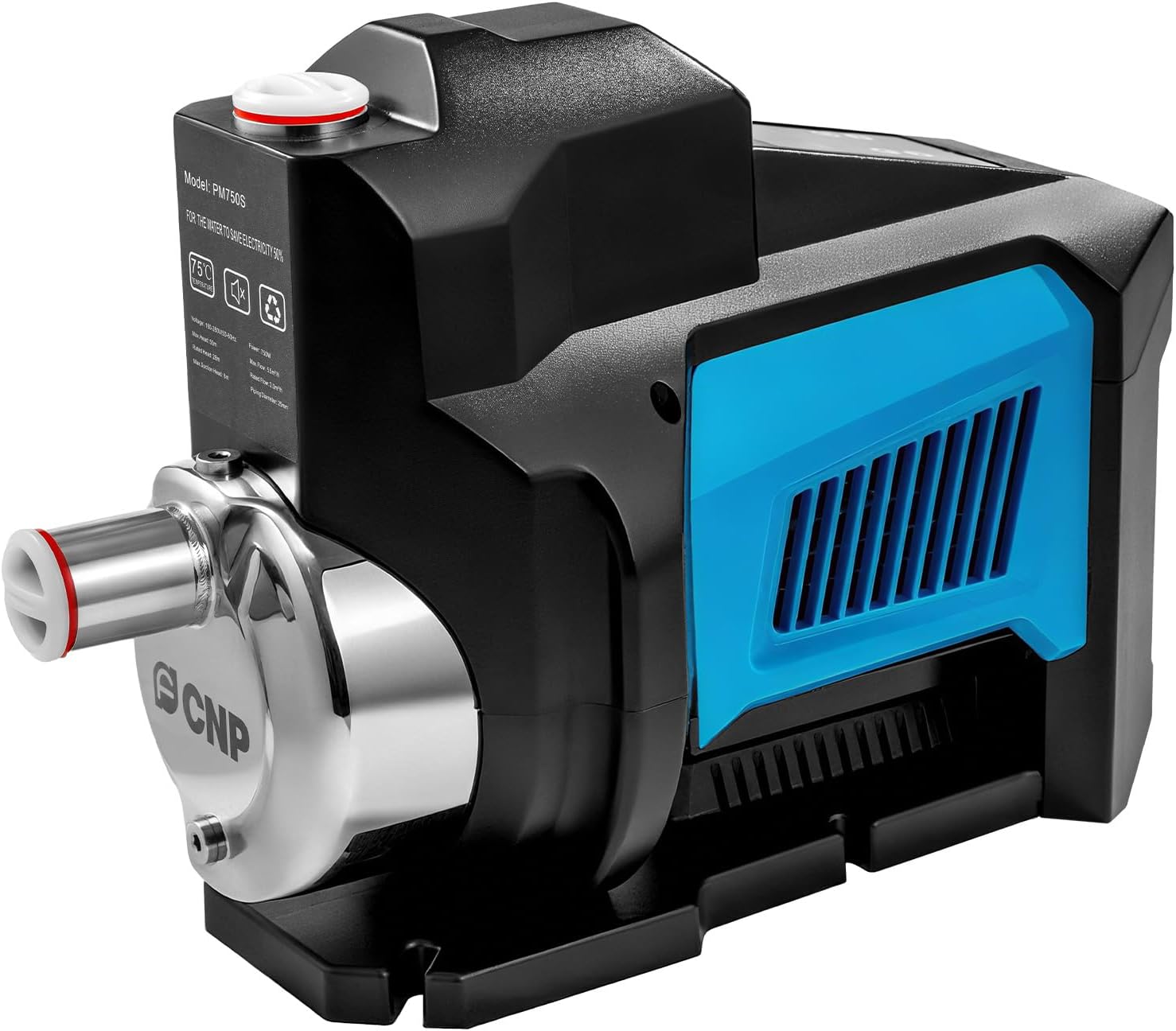
The FCNP PM750S is a whole house water pressure booster pump designed for homes with low water pressure. It is particularly suited for properties with multiple floors or high water demand, promising to supply up to 10 faucets simultaneously with a constant 80 PSI pressure. This pump is ideal for homeowners needing a reliable upgrade from city main lines, rooftop tanks, or shallow wells.
Standout features include its smart variable frequency drive that automatically adjusts pressure based on water usage. This ensures a steady flow even when multiple faucets are open. The permanent magnet motor is both energy-efficient and quiet, with noise levels between 25 and 40 dB. In practice, many users confirm the pump runs quietly, though a click on startup is noticeable. The energy savings of over 50% compared to traditional motors are a significant long-term benefit.
Build quality is robust with a thickened stainless steel pump head that resists corrosion and handles hot water up to 167°F. The integrated design includes multiple protections such as dry run and power failure safeguards. However, some users have reported motor failure within two months of installation, indicating potential quality control issues. The warranty experience has been criticized as poor, which is a drawback for long-term investment.
While the pump performs well in many scenarios, real-world flow rates may differ from advertised specs. One reviewer noted that when lifting from zero to 50 PSI, the actual flow was closer to 2 GPM rather than the expected 13 GPM, so realistic expectations are important. The pump is also heavy and should be installed in a location with adequate ventilation.
Overall, the FCNP PM750S offers strong pressure boosting and smart features at a competitive price point. It is a good choice for those who need constant pressure and quiet operation, but buyers should be aware of potential reliability issues and consider purchasing an extended warranty. With proper installation and care, it can be a valuable addition to a home water system.
Buying Guide: How to Choose a Water Pump for House Water Pressure
No single pump fits every home. We compared deep-well submersibles with self-priming whole-house boosters across four key areas to help you decide. A submersible pump sits deep in your well, while a booster pump works above ground on your supply line. Each solves a different problem.
Flow Rate and Pressure
Flow rate and pressure are the two numbers that matter most. Flow rate, measured in gallons per minute (GPM), determines how much water the pump can supply at once. Pressure, measured in pounds per square inch (PSI), determines how strongly that water comes out of the tap. A weak shower often means low PSI; a slow-filling bathtub often means low GPM.
A constant pressure control maintains pressure even when multiple fixtures open, preventing the annoying temperature swing in the shower. Look for models with variable speed motors if you dislike pressure cycling. For an average home, 8 to 12 GPM at 30 to 50 PSI is a comfortable range.
A common mistake is choosing only by horsepower. Horsepower matters, but flow rate and shut-off head tell you whether the pump can actually supply all your fixtures. Match the specs to your household demand, not the number on the motor.
If you live in a two-story house, pay attention to the maximum shut-off head, which tells you how high the pump can push water. The Red Lion RL12G05-2W2V Submersible Well Pump delivers 12 GPM at 30 PSI and reaches a 212-foot shut-off, making it a strong match for deeper wells. The AQUASTRONG booster handles up to 1500 GPH, while the FCNP model moves 1532 GPH, perfect for multi-story homes.
Understanding your current demand will help you apply well pressure tank sizing principles to the whole system. If your tank is too small, even the best pump will short-cycle and wear out quickly.
Motor Type and Efficiency
The motor drives the pump, and the type of motor affects noise, energy use, and longevity. Standard induction motors are heavier and noisier. Modern permanent magnet motors with variable frequency drives adjust speed to match water demand, which saves energy and reduces noise. They also soft-start to avoid sudden pressure surges.
The AQUASTRONG Smart 45 uses a permanent magnet motor and runs quietly at around 55 dB. The FCNP PM750S goes even further, with noise levels as low as 25 to 40 dB. Both offer more than 50% energy savings over older pumps, which can reduce yearly operating costs. The Red Lion’s 2-wire submersible motor uses no control box, simplifying installation for well owners.
Variable speed pumps are also helpful when you use multiple appliances at the same time. They ramp up smoothly instead of kicking on at full power, which reduces water hammer and stress on your pipes. If the pump sits near a bedroom or living area, prioritize models with lower decibel ratings.
Build Quality and Materials
Pump parts are constantly in contact with water, so materials matter for both durability and safety. Stainless steel resists corrosion and scale, while high-temperature plastics can degrade over time. Look for NSF/ANSI certification if the pump will deliver drinking water.
The Red Lion features a stainless steel pump casing and is NSF/ANSI 372 certified for potable water, making it safe for household supply. The AQUASTRONG includes a stainless steel impeller and handles water up to 175 degrees Fahrenheit. The FCNP pump head is thickened stainless steel rated to 167 degrees Fahrenheit, which adds protection in hot climates or homes with high water temperatures.
This stainless construction also prevents rust water from entering your plumbing. Built-in check valves and suction screens also help. A check valve prevents backflow and keeps the pump from rapid cycling; a suction screen keeps debris away from the impellers.
A quality pump should last many years with proper sizing and maintenance, so choosing stainless steel and smart protection is a smart long-term decision. For a closer look at how tanks interact with these pumps, read how a well pressure tank works.
Smart Controls and Protection
A smart pump does more than push water. It monitors pressure, adjusts speed, and shuts down when something goes wrong. Look for dry-run protection, overheating protection, pump-block protection, and thermal overload switches. These features prevent expensive damage and reduce the need for service calls.
The AQUASTRONG Smart 45 has fault indicators and protection against dry running, overheating, pipeline leakage, and power failure. The FCNP model also includes dry-run and power-failure protection with a microcomputer control system. Both are self-priming, so they pull water from a shallow well or tank without manual priming.
The control panel gives you quick access to fault codes, so you can diagnose problems without calling a professional.
Installation ease also sets these models apart. The Red Lion uses a 1-1/4-inch FNPT discharge and fits in a 4-inch well. Both boosters connect to standard household wiring and include integrated controls.
These safeguards let the pump run 24/7 without constant supervision. For more system-level advice, browse our pressure systems guides.
Final Thoughts
For most homeowners replacing a failing well pump, we recommend the Red Lion RL12G05-2W2V Submersible Well Pump because it delivers reliable 12 GPM performance without a separate control box. If you are fighting low pressure from municipal supply or a shallow well, choose the Aquastrong Whole House Water Pressure Booster Pump for constant smart pressure across your entire home.
Frequently Asked Questions
What size water pump do I need for a house?
Measure your peak demand by counting how many fixtures could run at once. A typical three-bedroom home needs a pump that delivers 10 to 12 GPM at 40 to 60 PSI. If your home has a large bathtub or irrigation system, lean toward the higher end. In 2026, the whole-house boosters and the 1/2 HP submersible pump in this guide all fall within that range.
Can a booster pump increase low house water pressure?
Yes. A whole-house water pressure booster pump connects to your main water line and raises pressure when demand exceeds supply. The AQUASTRONG and FCNP models both adjust automatically, so the shower stays strong even if someone flushes a toilet or starts the washing machine. This is the simplest fix for low water pressure when the municipal supply is already adequate.
Should I choose a submersible well pump or a whole-house booster pump?
Choose a submersible well pump if you draw water from a deep well. Choose a booster pump if you already have municipal water or a storage tank but need higher pressure. Our how a well pressure tank works guide explains the role of the tank in both setups. A deeper well may require a larger pressure tank or a higher switch setting.
Are variable speed water pumps worth it?
Yes, especially if you want quiet operation and lower energy bills. Variable speed models like the AQUASTRONG and FCNP adjust their output to match real-time usage. This avoids constant on-off cycling that wears out standard pumps and can reduce energy consumption significantly.


Write Your Review
No reviews yet. Be the first to share your experience!